
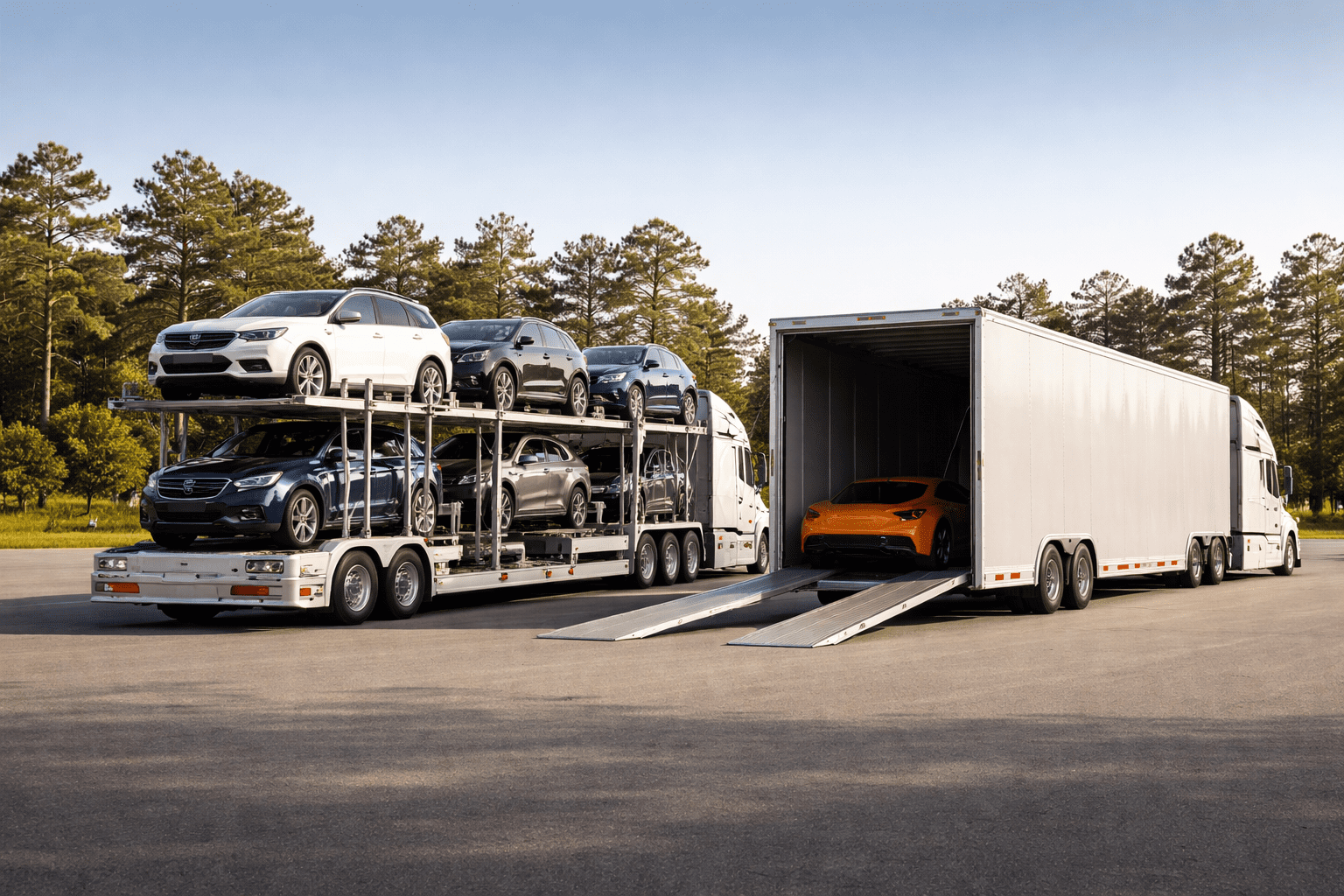
Enclosed Auto Carriers: A Protected Way to Transport Your Vehicle
Enclosed Auto Carriers: A Protected Way to Transport Your Vehicle
When a vehicle needs to be moved, how it is transported can be just as important as where it is going. Enclosed auto carriers offer a way to move cars inside a covered trailer, shielding them from many of the conditions they might encounter on the road. They can be a practical choice for classic, prestige, performance and other high-value vehicles, as well as for owners who want extra protection during transit.
What is an enclosed auto carrier?
An enclosed auto carrier is a transport vehicle with a covered loading area. Unlike an open carrier, where vehicles are secured on an exposed trailer, an enclosed carrier keeps the vehicle inside the trailer for the journey. Depending on the vehicle and trailer design, cars may be loaded using ramps or a lift system and secured in place for transport.
Enclosed carriers are available in different sizes and configurations. The right option depends on factors such as the vehicle’s dimensions, ground clearance, condition and collection or delivery arrangements.
Benefits of enclosed vehicle transport
Protection from the elements
A covered trailer helps protect a vehicle from rain, road spray, dust and direct sunlight during transit. It can also reduce exposure to loose debris and other external conditions. While enclosed transport cannot remove every possible risk, it provides an additional layer of protection compared with an open trailer.
Suitable for specialist vehicles
Enclosed transport is often considered for classic cars, prestige models, sports cars, race cars and restored vehicles. It may also suit vehicles with low ground clearance or delicate finishes, where careful loading and extra protection are priorities.
Added privacy
Because the vehicle is out of view while inside the trailer, enclosed transport can offer greater privacy than open transport. This may be useful when moving a particularly valuable, rare or distinctive car.
Enclosed and open carriers: what is the difference?
The main difference is whether the vehicle travels in a covered space. Open carriers are widely used and can be a suitable choice for many everyday vehicles. Enclosed carriers provide more protection from weather and road conditions, but availability may be more limited and the service may cost more.
The best option depends on the vehicle, the route, your priorities and your budget. For a standard car in good condition, an open carrier may meet your needs. For a vehicle requiring additional protection, it may be worth requesting a quote for enclosed transport and comparing the service details.
What to check before booking
- Vehicle suitability: Share the vehicle’s make, model, dimensions and any details about low ground clearance or modifications.
- Loading arrangements: Ask how the vehicle will be loaded and secured, particularly if it is non-running or has limited clearance.
- Collection and delivery: Confirm the locations, access requirements and whether the vehicle needs to be collected or delivered at a nearby suitable point.
- Insurance: Ask what cover applies during transport, what it includes and whether any limits or exclusions may affect your vehicle.
- Timing: Check the estimated collection and delivery window, and how updates will be provided.
- Condition records: Take photographs of the vehicle before collection and review any condition report provided by the transport company.
Preparing a car for enclosed transport
Before collection, remove personal belongings and make sure the vehicle is accessible for inspection and loading. Leave only the amount of fuel requested by the transport provider, and tell them about any mechanical issues, alarms or special starting instructions. If the car is not roadworthy or cannot be driven, explain this when arranging the service so that suitable loading equipment can be planned.
It is also sensible to photograph the vehicle from several angles before handover. Keep any keys, documents or accessories that are not required for transport with you, unless the provider has agreed otherwise.
Choosing an enclosed auto transport service
Look for a transport provider that clearly explains its collection process, vehicle-handling arrangements and insurance terms. A reliable service should be willing to discuss your vehicle’s requirements, provide a clear quotation and explain what is included. If your car is particularly valuable or has specialist features, share those details before booking rather than assuming standard arrangements will be suitable.
Is enclosed transport right for your vehicle?
Enclosed auto carriers can offer valuable protection and reassurance when moving a vehicle that needs careful handling. They are not necessary for every journey, but they can be a worthwhile option for specialist vehicles, valuable cars or owners who prioritise protection from the elements. Comparing the available transport options and checking the details of the service will help you choose an approach suited to your vehicle and journey.
Essential Tips for Safely Using Enclosed Auto Carriers
- Check the carrier’s dimensions before booking.
- Confirm your vehicle fits the height and width limits.
- Choose a carrier with suitable insurance cover.
- Remove loose items from the vehicle.
- Photograph the car before collection.
- Check loading and unloading arrangements.
- Confirm delivery times and access requirements.
- Keep the carrier’s contact details handy.
Check the carrier’s dimensions before booking.
Before booking an enclosed auto carrier, check that its internal dimensions can accommodate your vehicle, including its length, width and height. This is especially important for larger cars, vans, modified vehicles or those with roof racks, spoilers or other accessories. Confirm the measurements with the transport provider and mention any low ground clearance, as this can affect the loading method as well as whether the vehicle will fit safely.
Confirm your vehicle fits the height and width limits.
Before booking an enclosed auto carrier, confirm that your vehicle fits within the trailer’s height and width limits. Include any roof racks, spoilers, mirrors or other modifications when checking its dimensions, as these can affect clearance. Providing accurate measurements helps the transport company choose a suitable carrier and avoid loading difficulties or delays.
Choose a carrier with suitable insurance cover.
Choose an enclosed auto carrier with insurance cover that is appropriate for your vehicle’s value and the journey. Before booking, ask the transport provider what the policy covers, check any limits, excesses or exclusions, and confirm whether damage during loading and unloading is included. If your vehicle is particularly valuable, consider whether additional cover is needed, and keep a written record of the provider’s insurance terms.
Remove loose items from the vehicle.
Before your vehicle is collected, remove loose items from the cabin, boot and storage compartments. Belongings can shift during transit, potentially damaging the interior or the items themselves, and may affect how safely the vehicle can be secured. Check door pockets, cup holders and under the seats, and ask your transport provider whether any specific items must be removed before loading.
Photograph the car before collection.
Before your car is collected, take clear photographs of its exterior and interior, including close-ups of any existing marks, scratches or damage. Capture the vehicle from several angles and make sure the images are well lit; keeping a record of the date can also be helpful. These photos provide a useful reference when the car is delivered, helping you check its condition and resolve any concerns with the transport provider.
Check loading and unloading arrangements.
Check how your vehicle will be loaded and unloaded before booking an enclosed auto carrier. Ask whether the transporter uses ramps or a lift system, and explain if your car has low ground clearance, is modified or cannot be driven. Confirming these details in advance helps the transport company arrange suitable equipment and reduces the risk of delays or difficulties at collection and delivery.
Confirm delivery times and access requirements.
Before booking an enclosed auto carrier, confirm the expected delivery time and check that the drop-off location is suitable for the transporter. Narrow roads, low bridges, height restrictions or limited turning space may prevent a large carrier from reaching your address. Agree a convenient alternative meeting point if needed, and ask how you will be kept informed of any changes to the delivery schedule.
Keep the carrier’s contact details handy.
Keep the enclosed carrier’s contact details handy throughout the journey. That way, you can quickly get in touch if you need an update, have a question or need to pass on important information about collection or delivery. It’s also helpful to confirm the best contact number and when the carrier is available before your vehicle is picked up.