
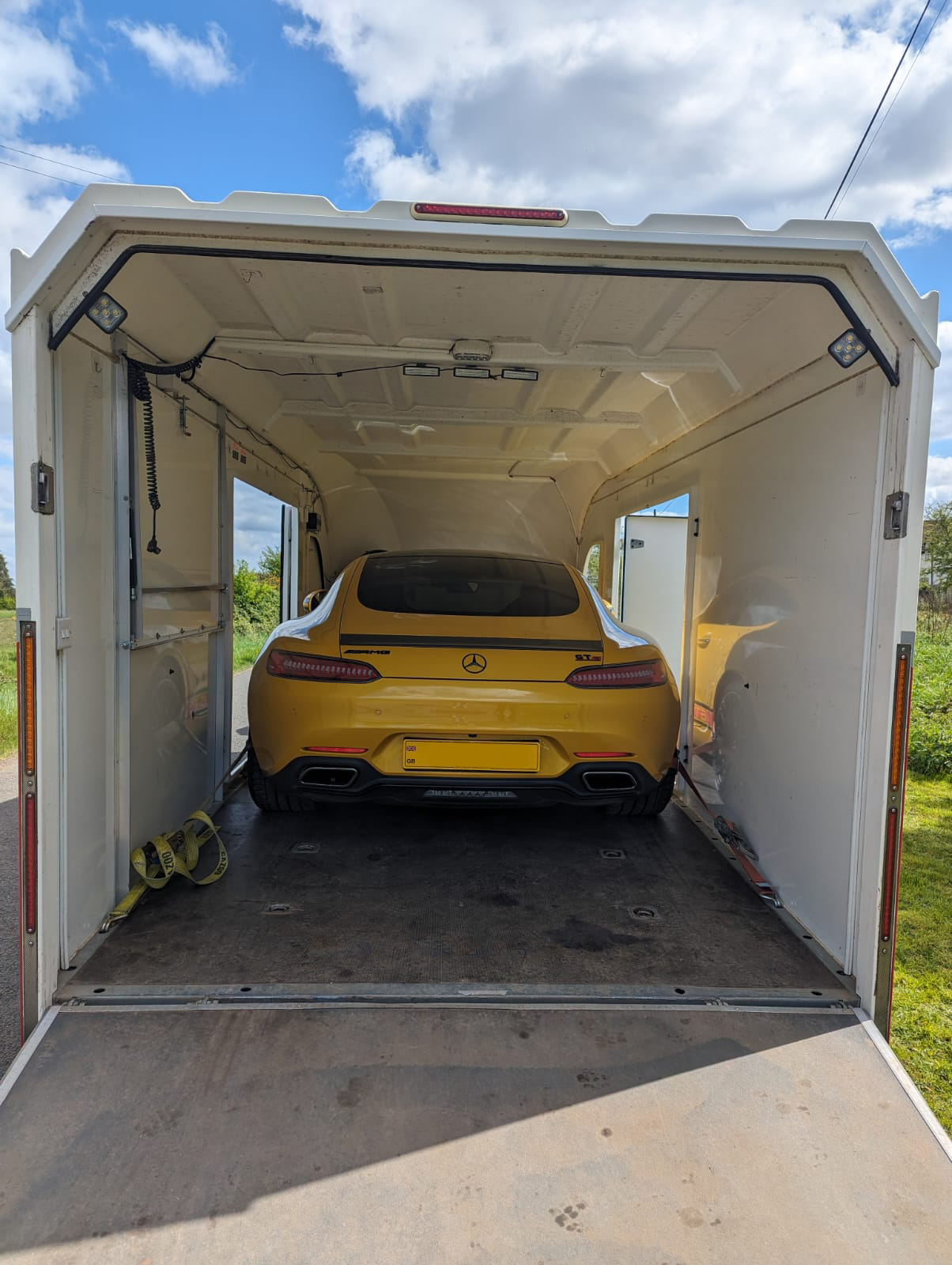
Enclosed Auto Transport: A Guide to Protecting Your Vehicle
Enclosed Auto Transport: A Guide to Protecting Your Vehicle
Enclosed auto transport is a vehicle delivery service in which a car is carried inside a covered trailer rather than on an open transporter. The enclosed trailer helps shield the vehicle from weather, road debris and public view while it is being moved.
It is often chosen for classic, luxury, prestige, competition and high-value vehicles, as well as cars that need extra care during transit. This guide explains how enclosed transport works, what to consider when booking and how it compares with open transport.
What is enclosed auto transport?
An enclosed transporter has solid sides and a roof, creating a covered space for the vehicles it carries. Depending on the operator and trailer design, vehicles may be loaded using ramps or a lift system. The car is then secured inside for the journey.
Enclosed transport is available for different types of journeys, from local moves to longer-distance vehicle delivery. The service and equipment can vary, so it is worth discussing your vehicle’s size, condition and requirements with the transport provider before booking.
Why choose enclosed transport?
- Greater protection from the elements: The covered trailer helps protect a vehicle from rain, wind, dust and direct sunlight during transit.
- Reduced exposure to road debris: A solid enclosure provides an additional barrier against stones and other debris thrown up from the road.
- More privacy: The vehicle is less visible while being transported, which may suit owners of valuable or rare cars.
- Careful handling options: Some enclosed services offer specialist loading equipment or arrangements for vehicles with low ground clearance. Confirm the available options before booking.
Enclosed transport can reduce exposure to certain risks, but it cannot remove every risk associated with moving a vehicle. Ask the provider how the car will be loaded, secured and covered by insurance during transit.
Which vehicles may benefit from enclosed auto transport?
Enclosed transport may be a suitable choice for:
- Classic and vintage cars
- Luxury or prestige vehicles
- Rare, collectible or high-value cars
- Competition and show cars
- Vehicles with low ground clearance
- Cars that have been restored or recently painted
It can also be useful whenever an owner wants extra protection during a vehicle move. The right option depends on the car, the route, the budget and the level of care required.
Enclosed versus open transport
Open transport carries vehicles on an uncovered trailer. It is a common option and can be more economical, particularly for standard vehicles. The car is exposed to normal weather conditions and road debris, much as it would be during everyday driving.
Enclosed transport carries the vehicle inside a covered trailer. It generally offers more protection and privacy, but it may cost more and availability can vary by route and date.
| Feature | Enclosed transport | Open transport |
|---|---|---|
| Weather protection | Covered during transit | Exposed to the elements |
| Visibility | Vehicle is less visible | Vehicle is visible on the transporter |
| Typical cost | Often higher | Often more economical |
| Availability | May be more limited | Can be more widely available |
How does enclosed auto transport work?
- Request a quote: Provide the vehicle’s make, model, dimensions, collection and delivery locations, and preferred dates. Mention any modifications or special loading requirements.
- Confirm the service: Check what is included, the estimated collection and delivery arrangements, insurance details and any conditions that apply.
- Prepare the vehicle: Remove personal belongings, check that the car is in a suitable condition for loading and make sure the keys are available if required.
- Inspect at collection: Record the vehicle’s condition with the driver before it is loaded. Take dated photographs from several angles.
- Arrange delivery: Be available at the agreed destination, inspect the car on arrival and report any concerns promptly.
What affects the cost?
The price of enclosed auto transport depends on a number of factors, including:
- The distance and route
- The size, weight and condition of the vehicle
- Whether the car runs and can be driven onto the transporter
- Collection and delivery access
- The time of year and availability of suitable transport
- Any specialist equipment or handling requirements
For an accurate quote, provide complete details and ask whether the price includes collection, delivery, insurance and any additional handling charges. A lower price should not be the only consideration: check the service details and provider’s terms as well.
Preparing your car for enclosed transport
A little preparation can help make collection and delivery smoother:
- Remove personal items and loose accessories.
- Leave the fuel level low but sufficient for loading and unloading, unless the provider advises otherwise.
- Check tyre pressures and ensure the battery is charged if the vehicle is operational.
- Tell the provider about alarms, immobilisers, leaks or mechanical issues.
- Take photographs of the vehicle before collection.
- Remove or secure items such as detachable aerials and spoilers where appropriate.
- Make sure the collection and delivery locations can accommodate the transporter, or agree a suitable alternative meeting point.
Choosing an enclosed auto transport provider
Before booking, ask about the transporter used, loading method, expected timings and communication during the journey. Check the provider’s insurance arrangements and find out how the vehicle’s condition will be recorded at collection and delivery. It is also sensible to confirm cancellation terms and what happens if access or timing changes.
For a valuable or specialist vehicle, share its dimensions, ground clearance and any particular handling instructions in advance. Clear information helps the provider assess whether the vehicle and route are suitable for the service.
Is enclosed auto transport right for you?
Enclosed auto transport can be a worthwhile option when added protection, privacy or specialist handling is important. Open transport may be more suitable for a standard vehicle when cost and availability are the main priorities. Comparing both options and checking the details of each quote can help you choose the service that best fits your vehicle and journey.
Frequently Asked Questions About Enclosed Vehicles and Car Transport
- Is it legal to tow a car with a rope?
- Can you sleep in an enclosed car?
- What does “enclosed vehicle” mean?
- What is an enclosed vehicle?
- What is the most trustworthy car shipping company?
- What is cargo in automobile?
Is it legal to tow a car with a rope?
Yes, in the UK a car can generally be towed with a suitable rope or chain, but the Highway Code requires the gap between the vehicles to be no more than 4.5 metres; if it is longer than 1.5 metres, the rope or chain must be made clearly visible to other road users. The person in the towed car must be able to steer and brake it, and the vehicle must be safe to tow. Rope towing is usually intended for short breakdown recovery, not transporting a car over a long distance; check the relevant rules, insurance and vehicle manufacturer’s guidance, and use a professional recovery service if in doubt.
Can you sleep in an enclosed car?
No, an enclosed car transporter is designed to carry vehicles, not passengers, so you cannot sleep inside it while it is being transported. For safety, passengers must travel separately, and the vehicle should be empty of people and personal belongings unless the transport provider has explicitly agreed otherwise. If you mean sleeping in a car with the windows and doors closed, avoid doing so with the engine running, as exhaust fumes can cause carbon monoxide poisoning; make sure the vehicle is parked safely and has adequate ventilation.
What does “enclosed vehicle” mean?
An “enclosed vehicle” is a car or other vehicle transported inside a covered trailer, rather than on an open transporter. The trailer’s solid sides and roof help shield it from weather and road debris during the journey, and keep it less visible. Enclosed transport is often chosen for classic, luxury or high-value cars.
What is an enclosed vehicle?
An enclosed vehicle is one transported inside a covered trailer with solid sides and a roof, rather than on an open transporter. This helps protect it from weather and road debris during the journey, making enclosed transport a popular choice for classic, luxury, high-value or delicate cars.
What is the most trustworthy car shipping company?
There is no single car shipping company that is best for everyone, so look for a provider with relevant experience, clear pricing, suitable insurance and consistently positive, independent customer reviews. Before booking enclosed auto transport, check what the insurance covers, how your vehicle’s condition will be recorded and whether collection and delivery arrangements are confirmed in writing. A trustworthy company should answer questions openly and explain its service and terms without pressure.
What is cargo in automobile?
In an automobile, cargo refers to the goods or belongings carried in the vehicle’s boot, load area or trailer. During enclosed auto transport, the service is intended to carry the vehicle itself, not personal belongings inside it. Transport providers may restrict or prohibit items left in a car because they can move during transit, add weight or affect insurance cover. Check the provider’s terms before collection and remove any personal items unless you have received clear permission.